Insights Library

Recovery Readiness Assessments, created for communities, counties, and behavioral health districts across Iowa, help people understand their local substance-use recovery landscape, compare community resources to similar-sized towns, and identify areas that may need additional support.


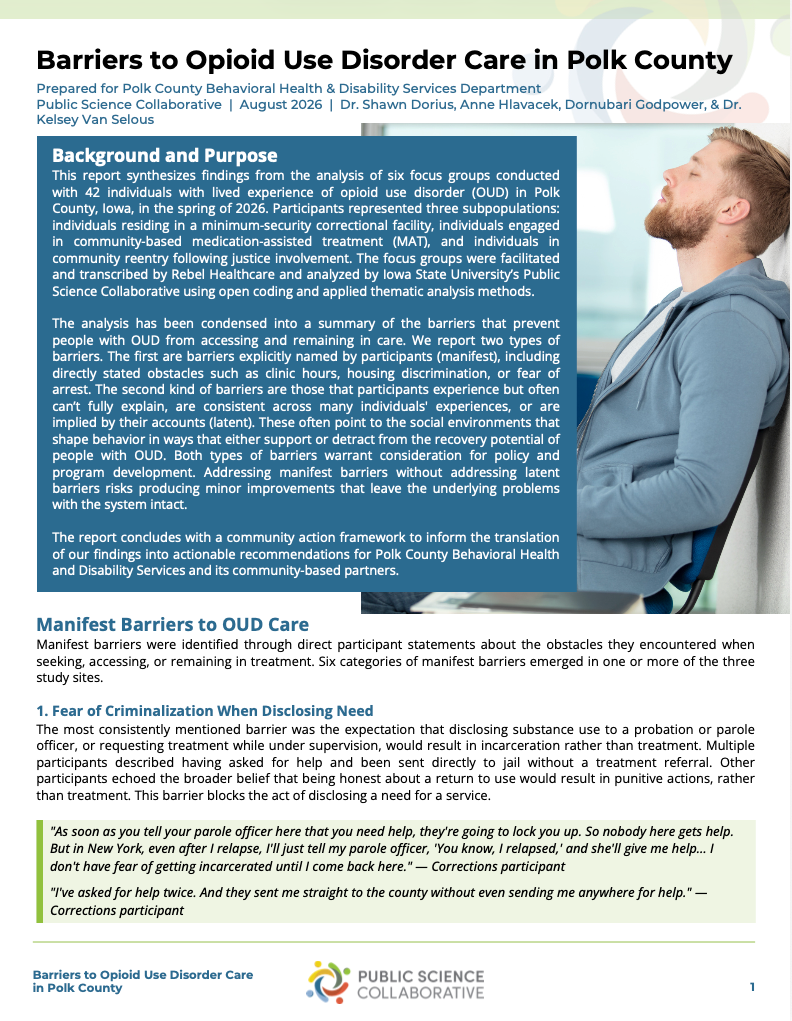
Barriers to Opioid Use Disorder Care in Polk County
The Public Science Collaborative analyzed and synthesized findings from six focus groups conducted with 42 individuals with lived experience of opioid use disorder (OUD) in Polk County, Iowa, in spring 2026. The focus groups were facilitated and transcribed by Rebel Healthcare. Participants represented three subpopulations: individuals residing in a minimum-security correctional facility, individuals engaged in…
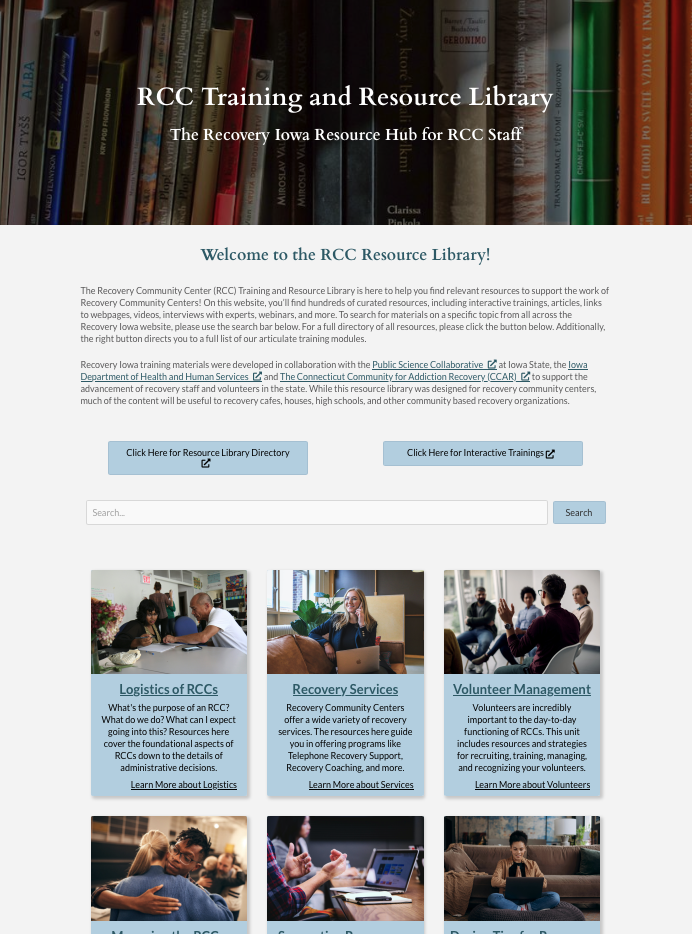
Training Library for Recovery Organizations
The Public Science Collaborative developed the Recovery Community Center (RCC) Training and Resource Library for the Recovery Iowa website in collaboration with the Iowa Department of Health and Human Services and The Connecticut Community for Addiction Recovery (CCAR) to support the advancement of substance use recovery organizations, staff, and volunteers in the state. Here, find…
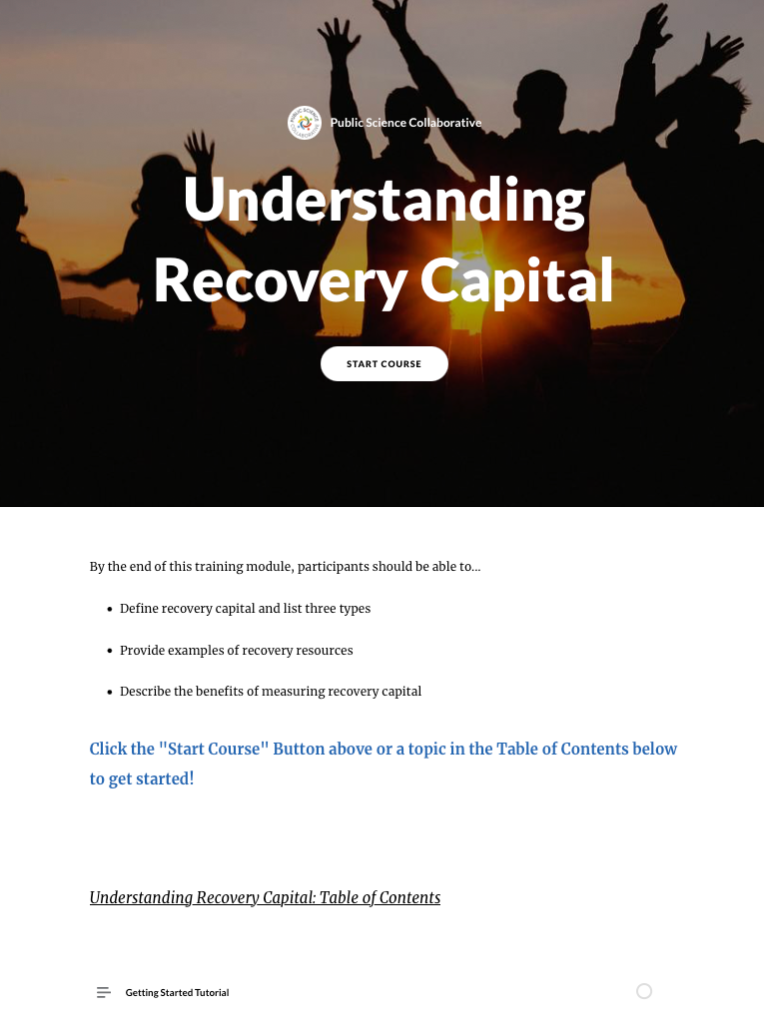
Recovery Services: Understanding Recovery Capital
The Public Science Collaborative developed the “Understanding Recovery Capital” training module as part of a series of training materials for the Recovery Iowa website in collaboration with the Iowa Department of Health and Human Services and The Connecticut Community for Addiction Recovery (CCAR) to support the advancement of substance use recovery organizations, staff, and volunteers…
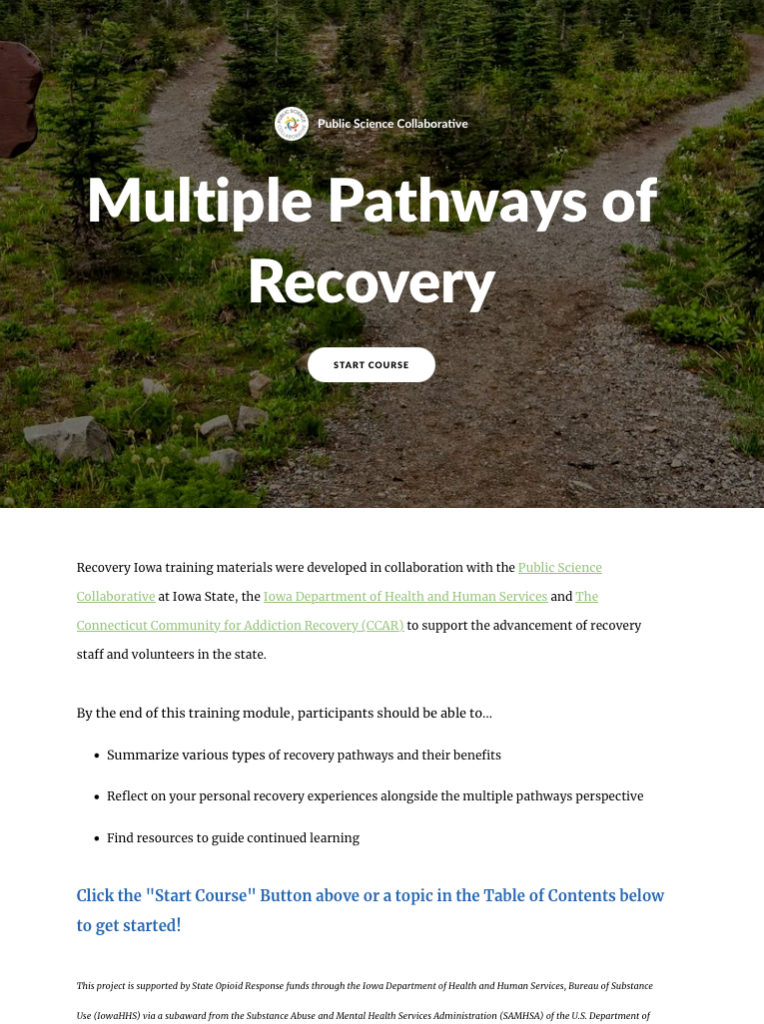
Supporting Recoverees: Multiple Pathways of Recovery Training
The Public Science Collaborative developed the “Multiple Pathways of Recovery Training” training module as part of a series of training materials for the Recovery Iowa website in collaboration with the Iowa Department of Health and Human Services and The Connecticut Community for Addiction Recovery (CCAR) to support the advancement of substance use recovery organizations, staff,…
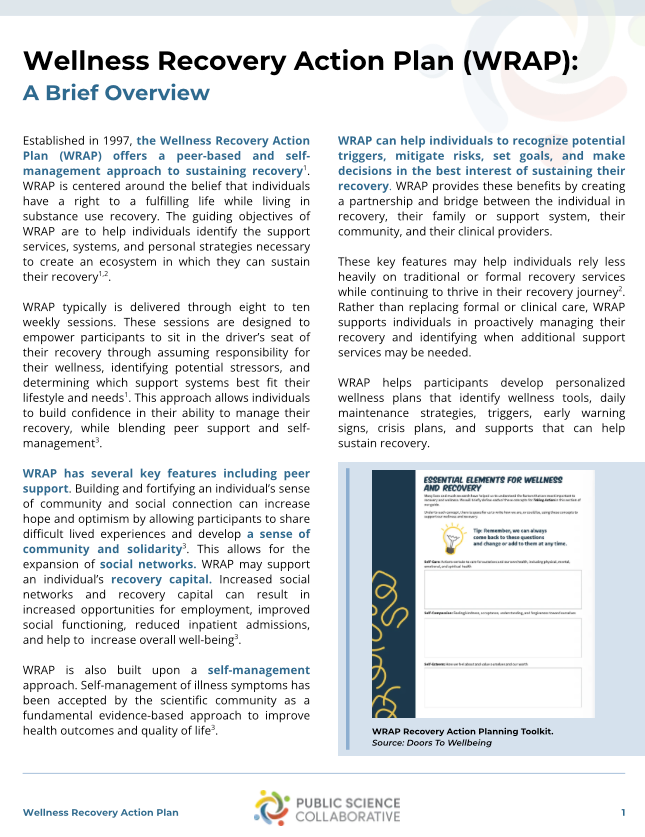
Wellness Recovery Action Plan: A Brief Overview
This quick read provides an overview of Wellness Recovery Action Plan (WRAP), which offers a peer-based and self-management approach to sustaining recovery. WRAP is centered around the belief that individuals have a right to a fulfilling life while living in substance use recovery. The guiding objectives of WRAP are to help individuals identify the support…
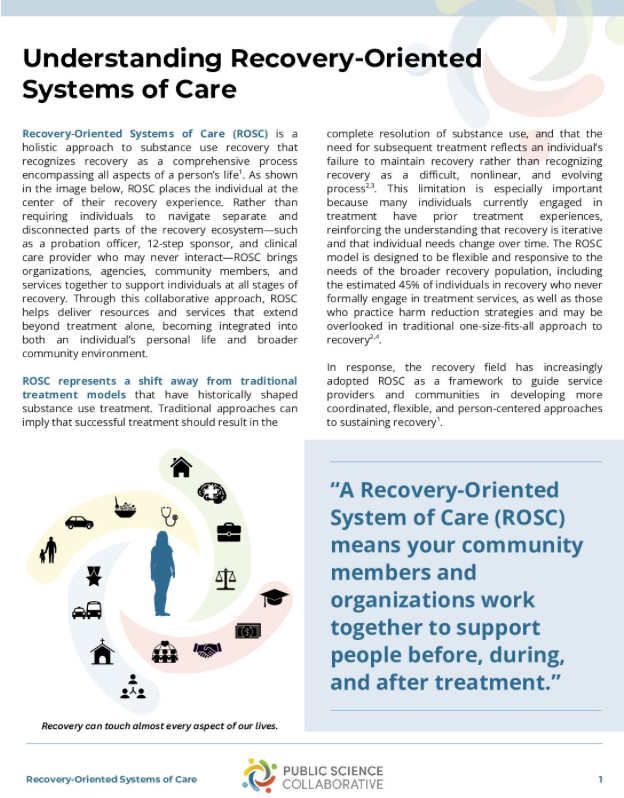
Understanding Recovery-Oriented Systems of Care
This quick read provides an overview of the Recovery-Oriented Systems of Care (ROSC) Framework, a holistic approach to substance use recovery that recognizes recovery as a comprehensive process encompassing all aspects of a person’s life. Through a collaborative approach, ROSC helps deliver resources and services that extend beyond treatment alone, becoming integrated into both an…
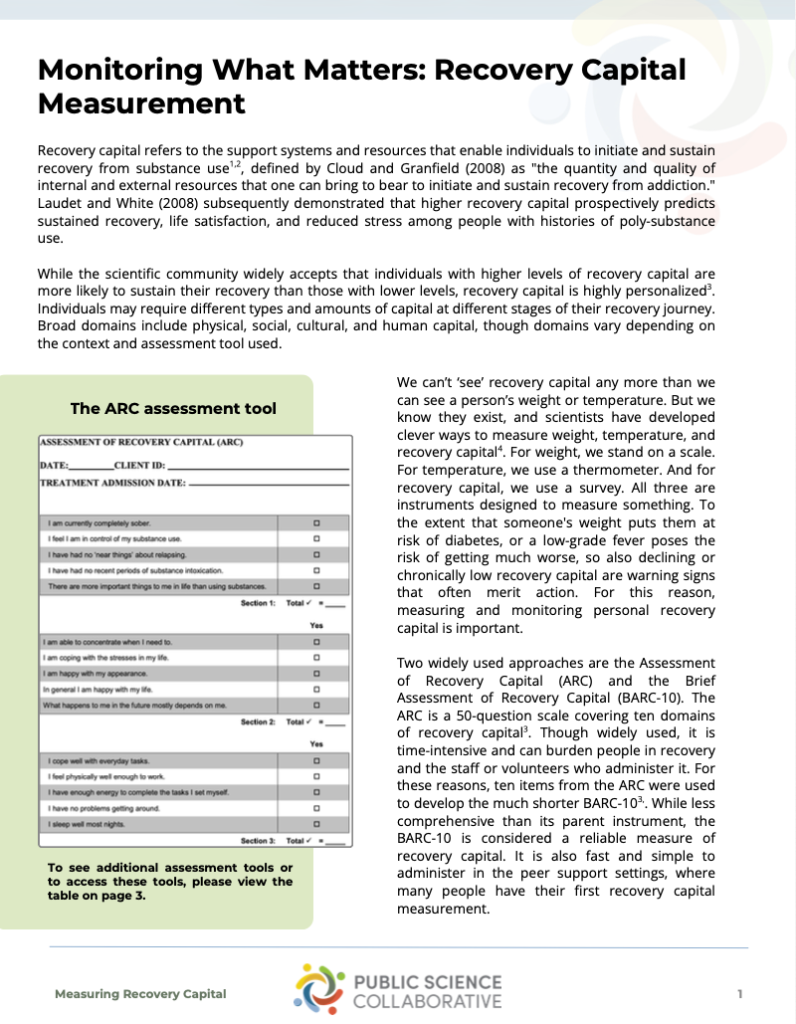
Monitoring What Matters: Recovery Capital Measurement
This quick read provides an overview of instruments for measuring and monitoring recovery capital. Recovery capital refers to the support systems and resources that enable individuals to initiate and sustain recovery from substance use. Recovery capital is unique to each individual, shaped by personal history, community context, and the stage of one’s recovery journey. Measuring…
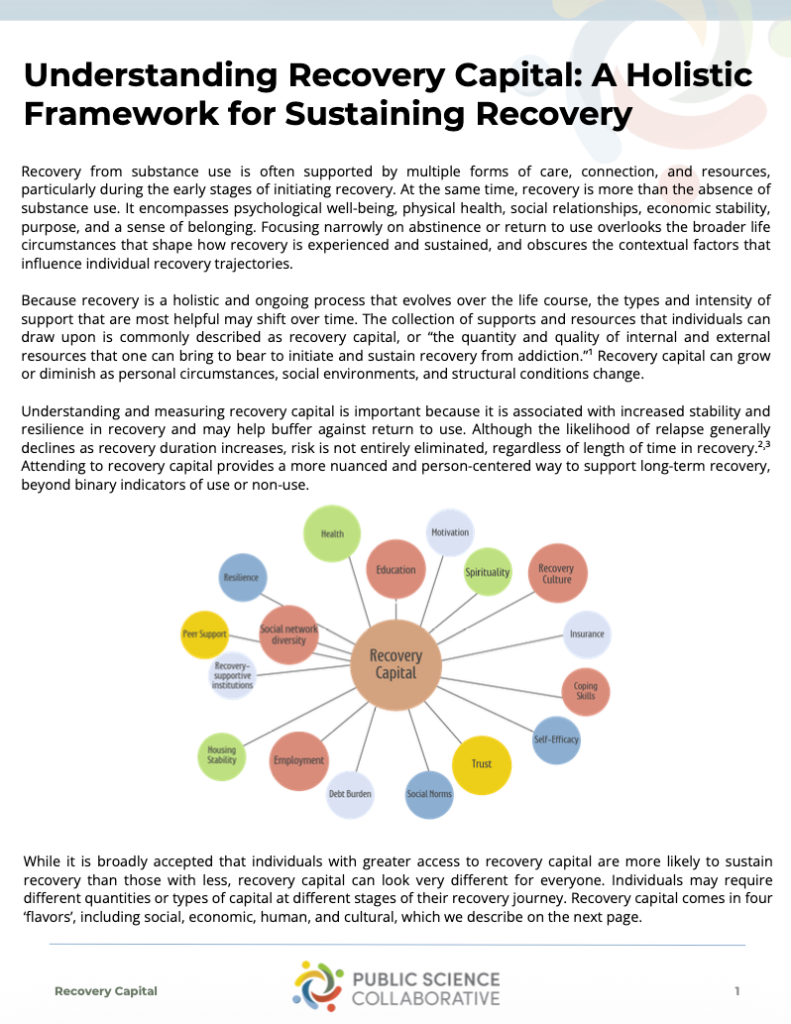
Understanding Recovery Capital: A Holistic Framework for Sustaining Recovery
This quick read provides an introduction of recovery capital. Recovery from substance use is often supported by multiple forms of care, connection, and resources, particularly during the early stages of initiating recovery. At the same time, recovery is more than the absence of substance use. It encompasses psychological well-being, physical health, social relationships, economic stability,…
2025 Iowa Legislative Report: Behavioral Health
The Public Science Collaborative (PSC) created the 2025 Iowa Legislative Report to guide individuals and organizations working in the substance use and behavioral health space as they navigate and monitor Iowa’s legislature. This report is the first in an annual policy series that summarizes legislation from the prior session and previews the upcoming session.
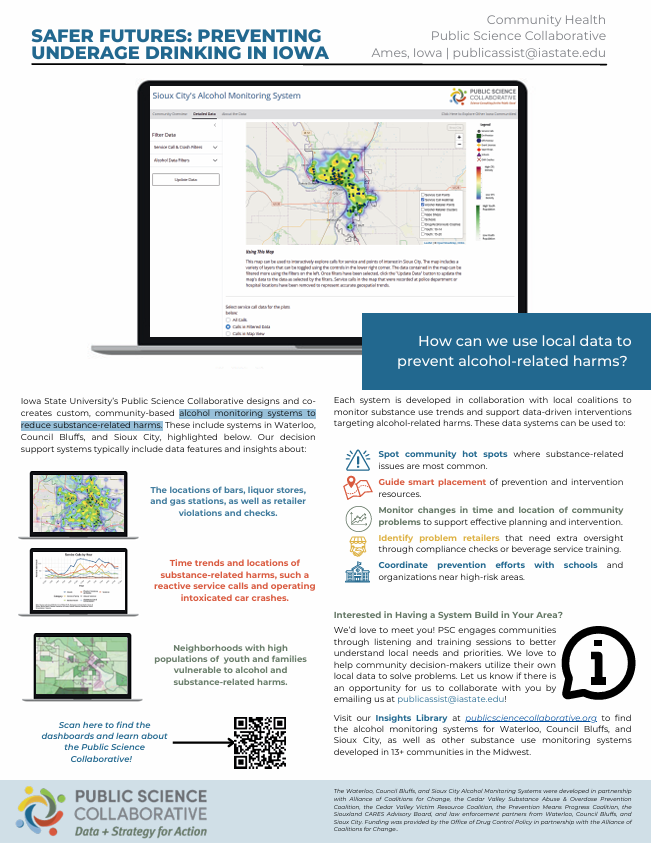
Safer Futures: Preventing Underage Drinking in Iowa
The Public Science Collaborative (PSC) partnered with Council Bluffs, Sioux City, and Waterloo to develop interactive dashboards of the alcohol risk environment in each community. The dashboards were developed as part of PSC’s participatory substance use surveillance monitoring program and are designed to serve as a resource to support data-informed decision-making aimed at reducing underage…
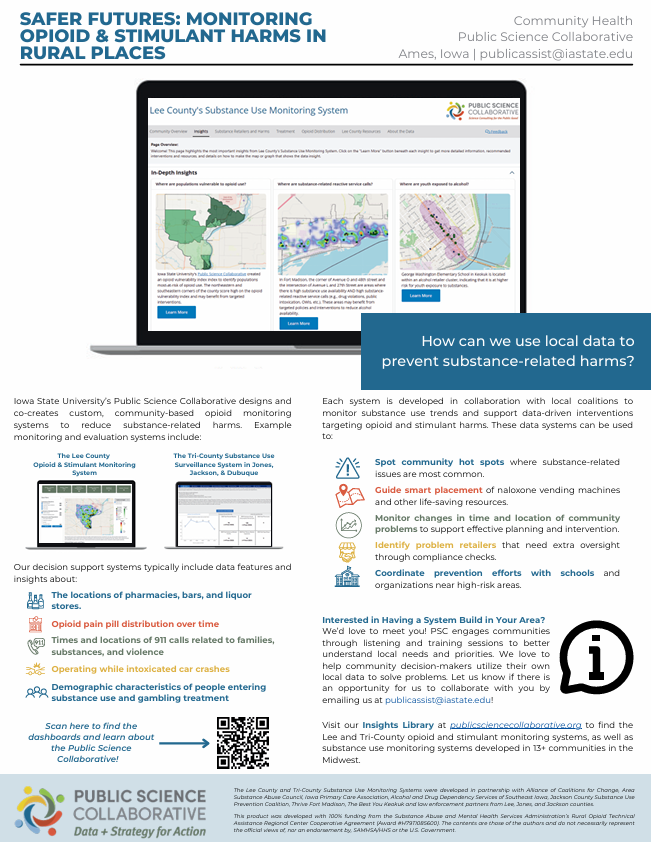
Safer Futures: Monitoring Opioid and Stimulant Harms in Rural Places
This quick read highlights community-based opioid monitoring systems the Public Science Collaborative developed as part of their participatory substance use surveillance monitoring program. These systems focus on the reduction of opioid-related harms and were launched in Lee, Jones, Jackson, and Dubuque counties.

Composting Training Manual for Cocoa Farmers
This user manual guides ISU-UP and CSRL staff, as well as cocoa farmers, through the process of composting their cocoa pod husks. Husks are a waste product that generate quickly and can cause environmental and human health concerns, such as black pod rot, or create breeding grounds for mosquitoes. By composting the husks, farmers can…