Insights Library

Recovery Readiness Assessments, created for communities, counties, and behavioral health districts across Iowa, help people understand their local substance-use recovery landscape, compare community resources to similar-sized towns, and identify areas that may need additional support.


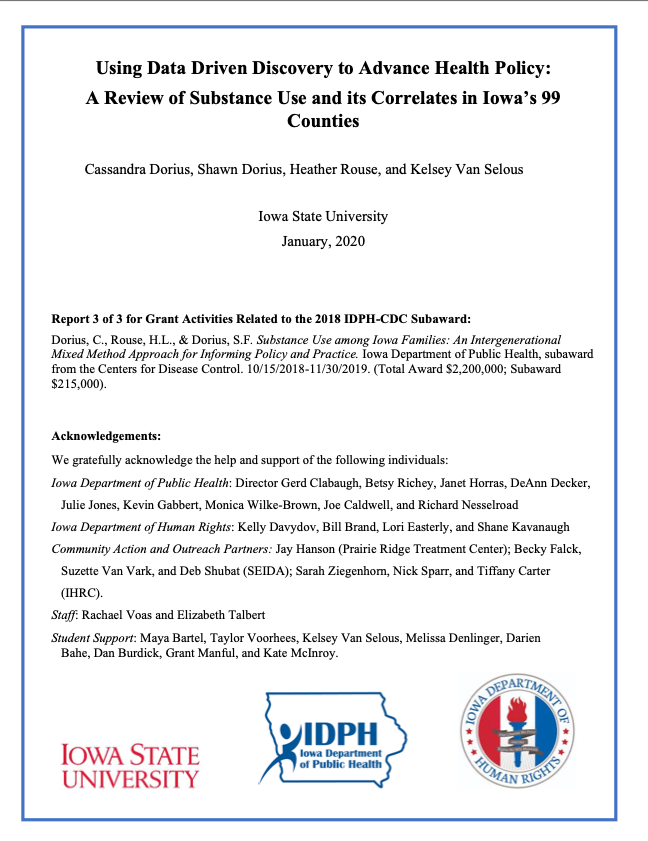
Using Data Driven Discovery to Advance Health Policy: A Review of Substance Use and its Correlates in Iowa’s 99 Counties
As part of Public Science Collaborative’s substance use work, this report analyzes substance use and its correlates across Iowa’s 99 counties using mixed methods and comprehensive data sources. It supports public health policy by identifying key risk factors, social conditions, and health indicators linked to substance use.
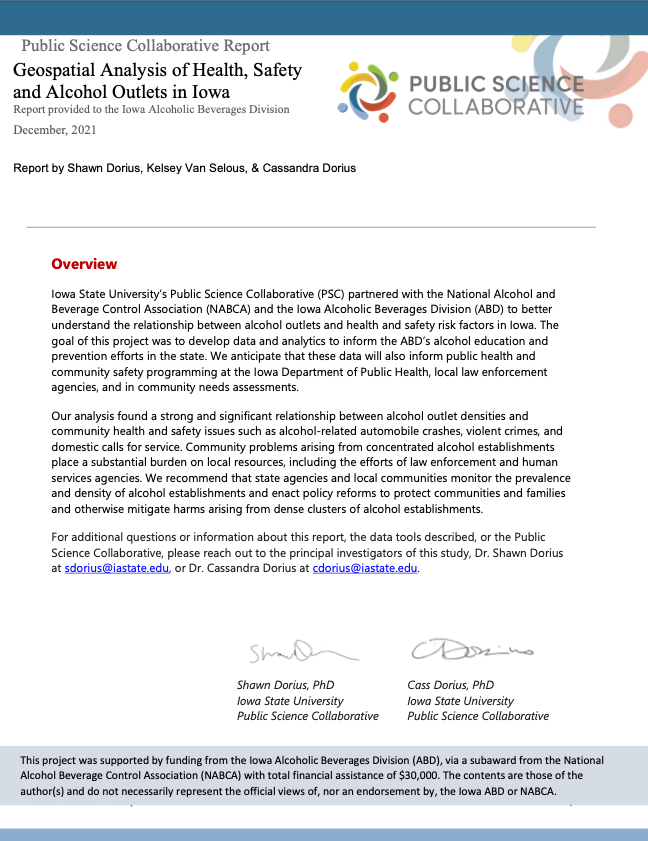
Geospatial Analysis of Health, Safety and Alcohol Outlets in Iowa
As part of Public Science Collaborative’s Alcohol Research Initiative, PSC partnered with the National Alcohol and Beverage Control Association (NABCA) and the Iowa Alcoholic Beverages Division (ABD) to better understand the relationship between alcohol outlets and health and safety risk factors in Iowa. The goal of this project was to develop data and analytics to…
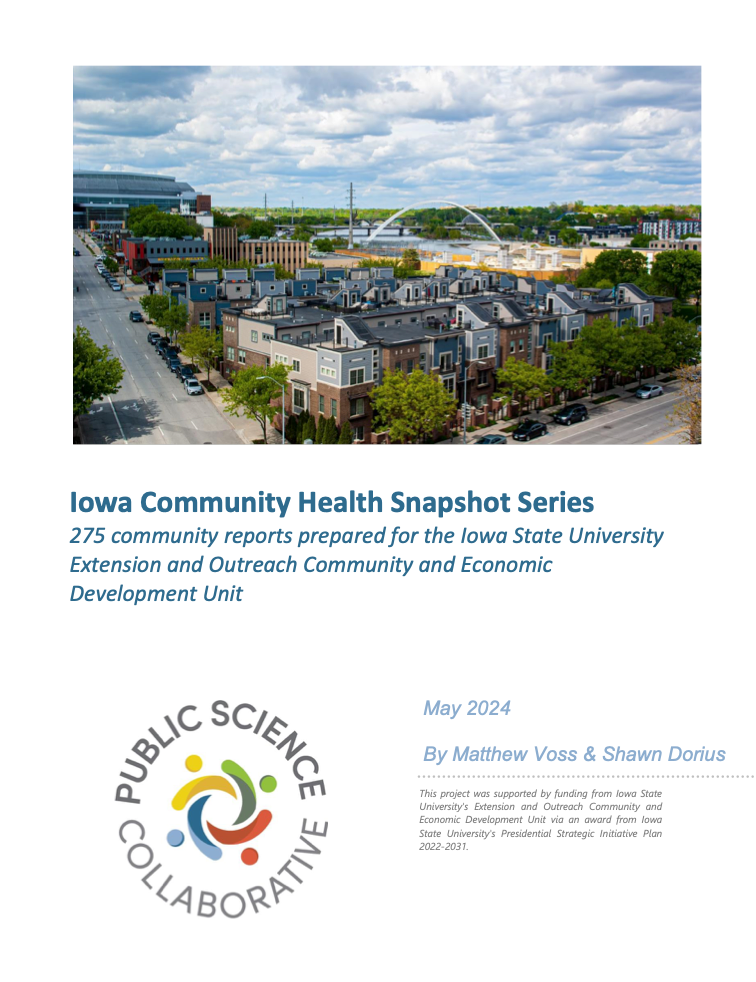
Iowa’s Health Snapshot Series
The Public Science Collaborative developed Iowa’s Health Snapshot Series, designed in partnership with Iowa State University Extension Community and Economic Development. This series includes 99 county reports, 275 community reports, and an interactive dashboard, all of which enable users to learn more about health in their counties and communities. Below, you can find links to…
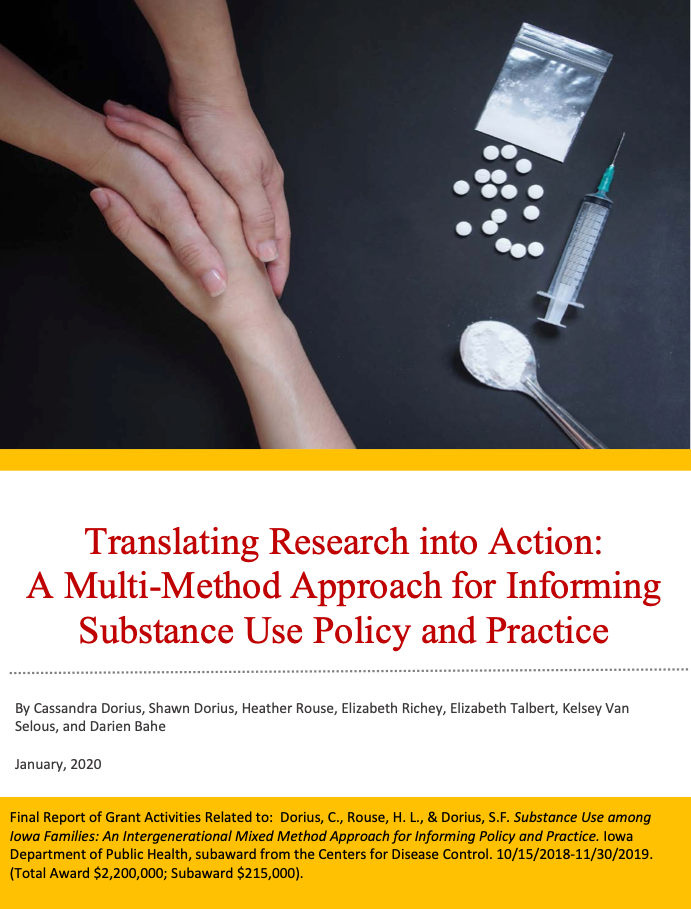
Translating Research into Action: A Multi-Method Approach for Informing Substance Use Policy and Practice
This report was funded by a grant from the Centers for Disease Control. The use of multiple research methods develops an understanding of effects that substance use has on families. Research was conducted at a variety of levels, working to develop program ideas with experts, interviews with families in which substance abuse has or is…
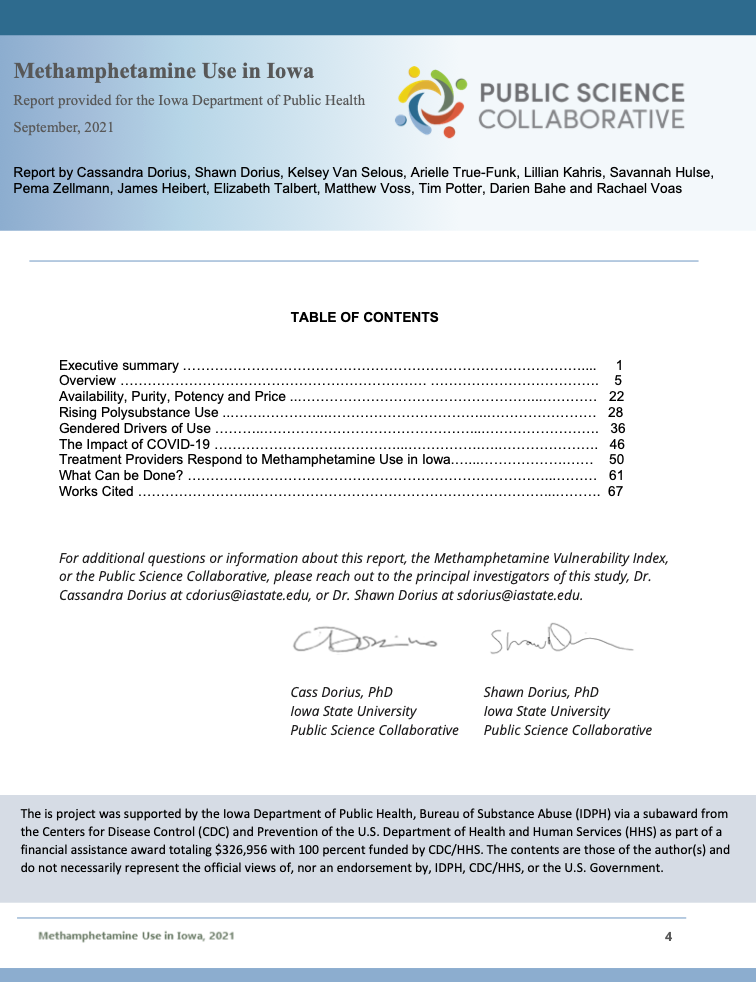
Methamphetamine Use in Iowa
This research was funded by the Centers for Disease Control (CDC). Via qualitative and quantitative methods, PSC identified a number of patterns in methamphetamine use across Iowa. Information was gathered from both people with lived experience and care providers, contributing to our understanding of best practices in providing services and resources to people who use…
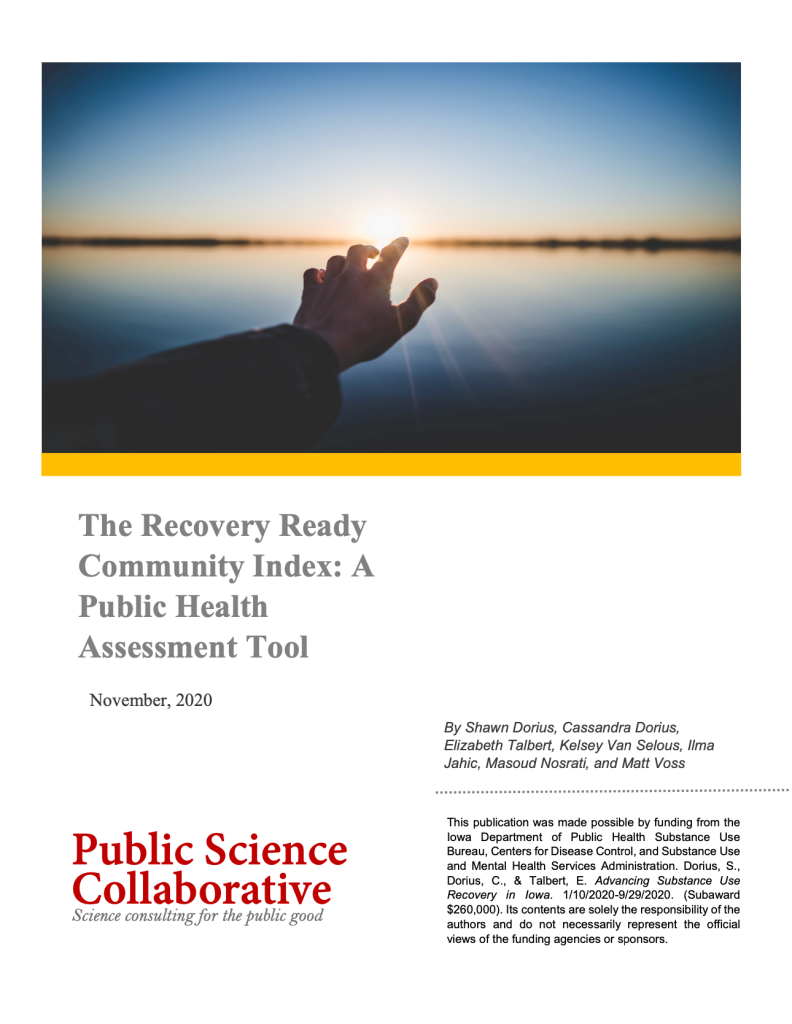
The Recovery Ready Community Index: A Public Health Assessment Tool
As part of the Public Science Collaborative’s substance use recovery work, PSC conducted an environmental scan to identify clinical and non-clinical recovery resources in Iowa’s cities and towns. These community-based resource data were used to construct quantitative indexes of recovery along four dimensions, a first of its kind Recovery Ready Community Index (RRCI). PSC mapped…
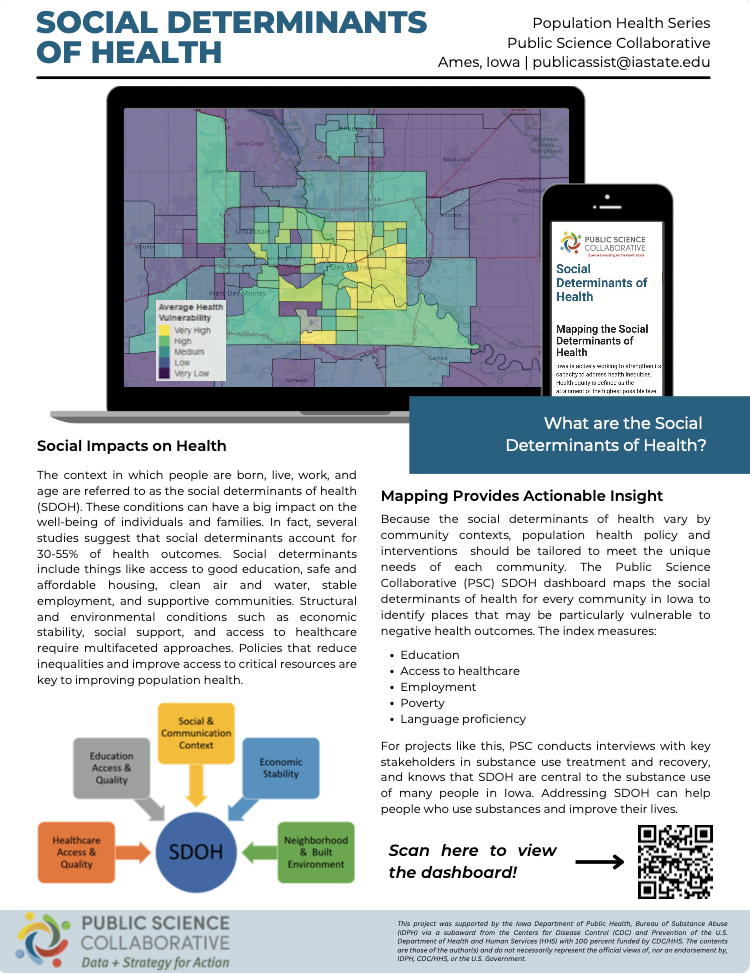
Social Determinants of Health: Quick Reads
As part of the Public Science Collaborative’s substance use work, PSC has created several maps for counties across Iowa to describe the social determinants of health. This quick read also provides context on what social determinants of health are and why mapping them is crucial.
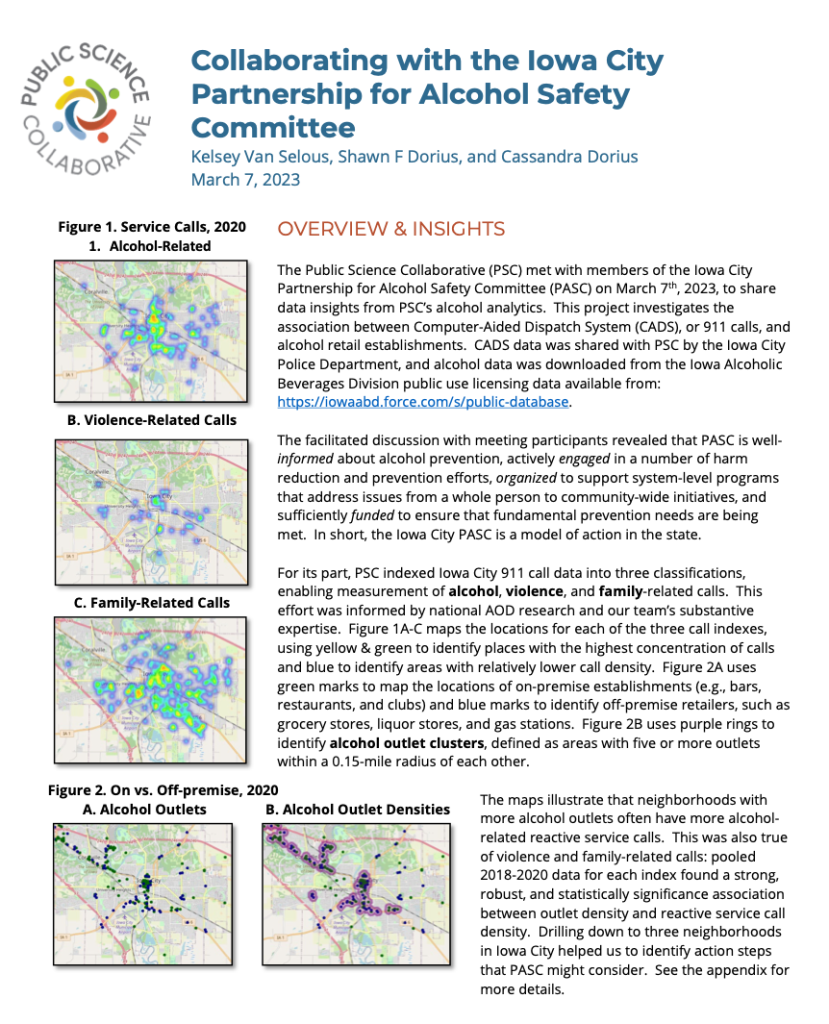
Collaborating with the Iowa City Partnership for Alcohol Safety Committee
As part of the Public Science Collaborative’s Alcohol Research Initiative, PSC partnered with Iowa City’s Partnership for Alcohol Safety Committee to share data insights from PSC’s alcohol analytics. This project investigates the association between Computer-Aided Dispatch System, or 911 calls, and alcohol retail establishments. PSC mapped locations for alcohol, violence, and family-related calls in relation…
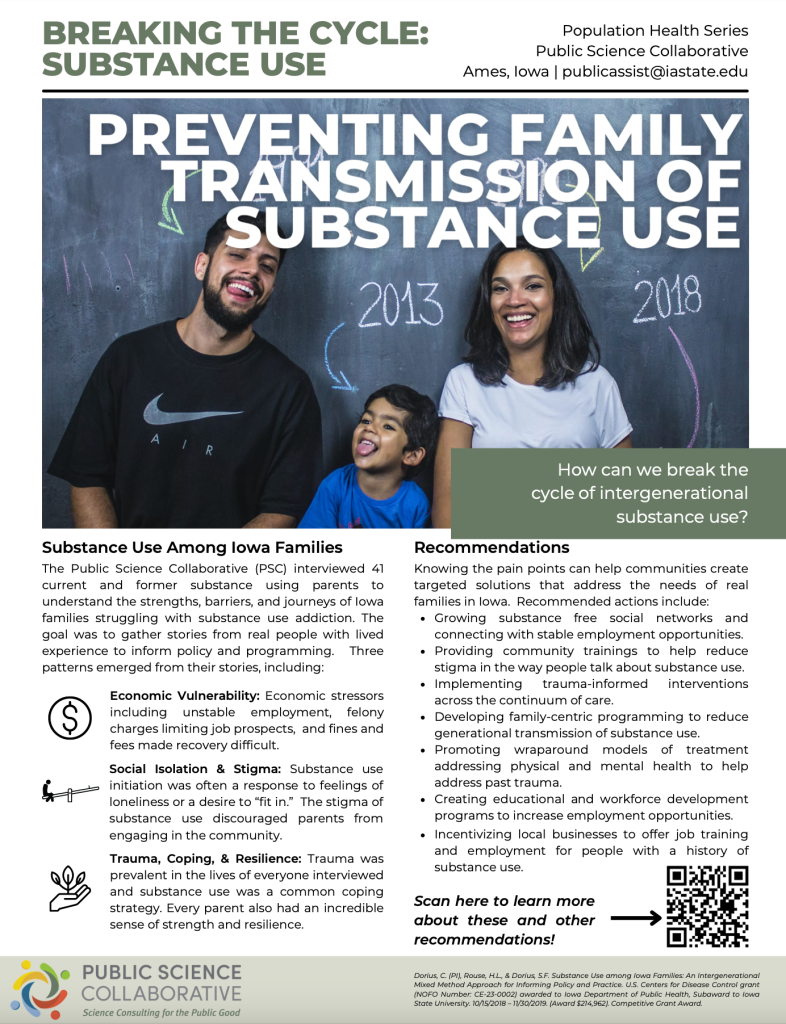
Breaking the Cycle, Substance Use: Quick Reads
Substance use often has generational implications. As part of the Public Science Collaborative’s substance use work, PSC interviewed parents who currently use or formerly used substances with the goal of gathering real stories to inform policy and programming. This quick read describes risk factors for multi-generational use, as well as state recommendations that can curb…
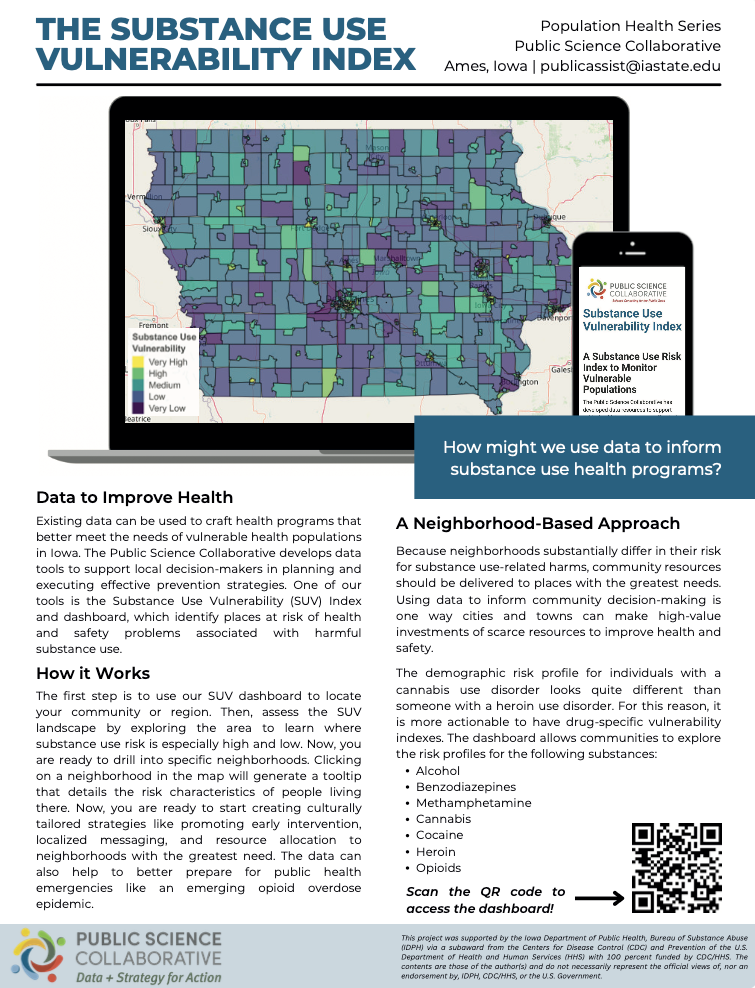
The Substance Use Vulnerability Index: Quick Reads
As part of the Public Science Collaborative’s substance use work, this quick read covers PSC’s Substance Use Vulnerability (SUV) Index, a map illustrating the rates of risk for substance use across Iowa counties based off of demographic data.
The Alcohol Outlet Landscape in Alabama
As part of the Public Science Collaborative’s Alcohol Research Initiative, PSC provided an in-depth look at the alcohol landscape in Alabama through: Cleaning and classifying Alabama alcohol license data Creating measures of alcohol outlet density to enable statewide monitoring and evaluation Creating measures of alcohol outlet density for the city of Montgomery Developing strategic recommendations…
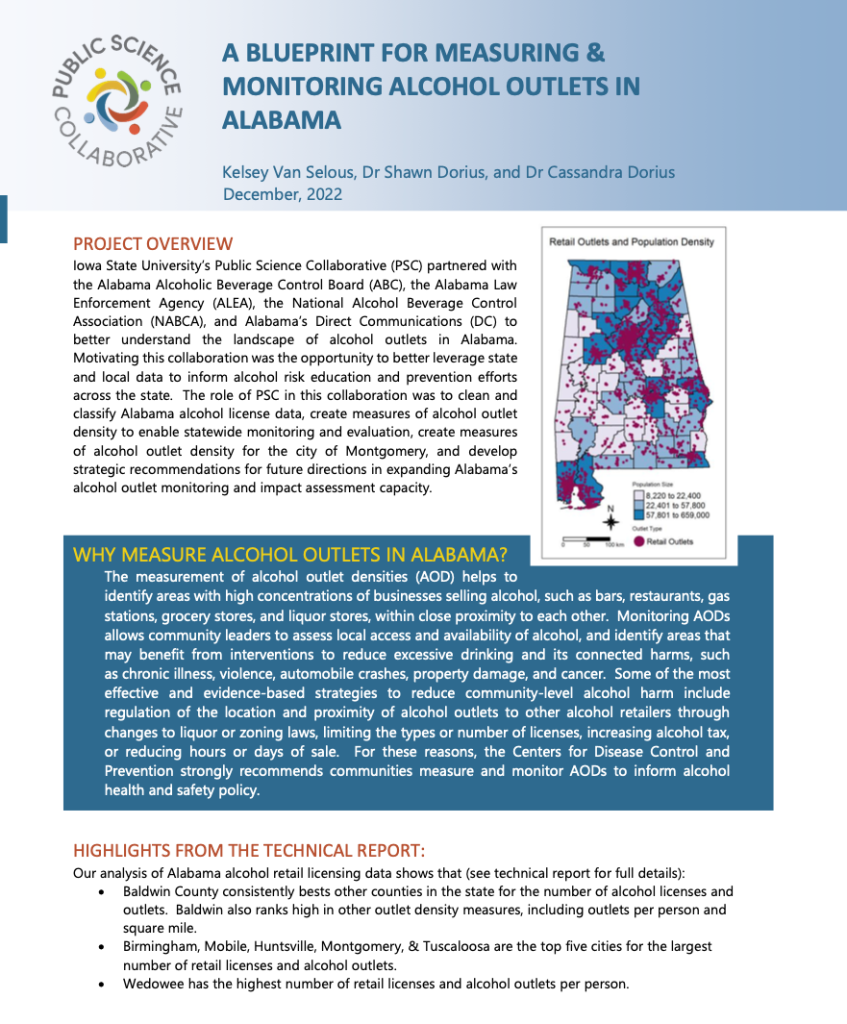
A Blueprint for Measuring & Monitoring Alcohol Outlets in Alabama, Executive Summary
As part of the Public Science Collaborative’s Alcohol Research Initiative, PSC partnered with the Alabama Alcoholic Beverage Control Board, the Alabama Law Enforcement Agency, the National Alcohol Beverage Control Association, and Alabama’s Direct Communications to better understand the landscape of alcohol outlets in Alabama and leverage state and local data to inform alcohol risk education…