Research Type: Quick Reads

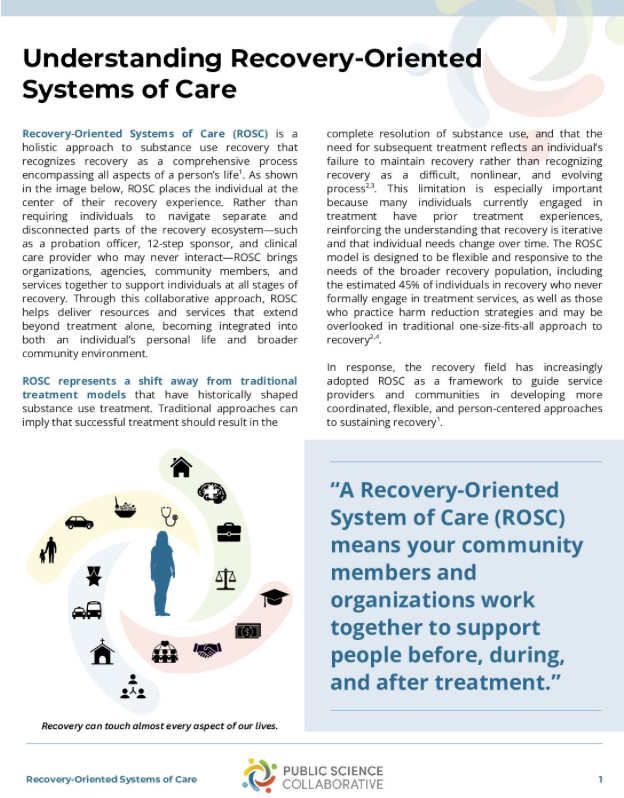
Measuring Recovery Capital cover page

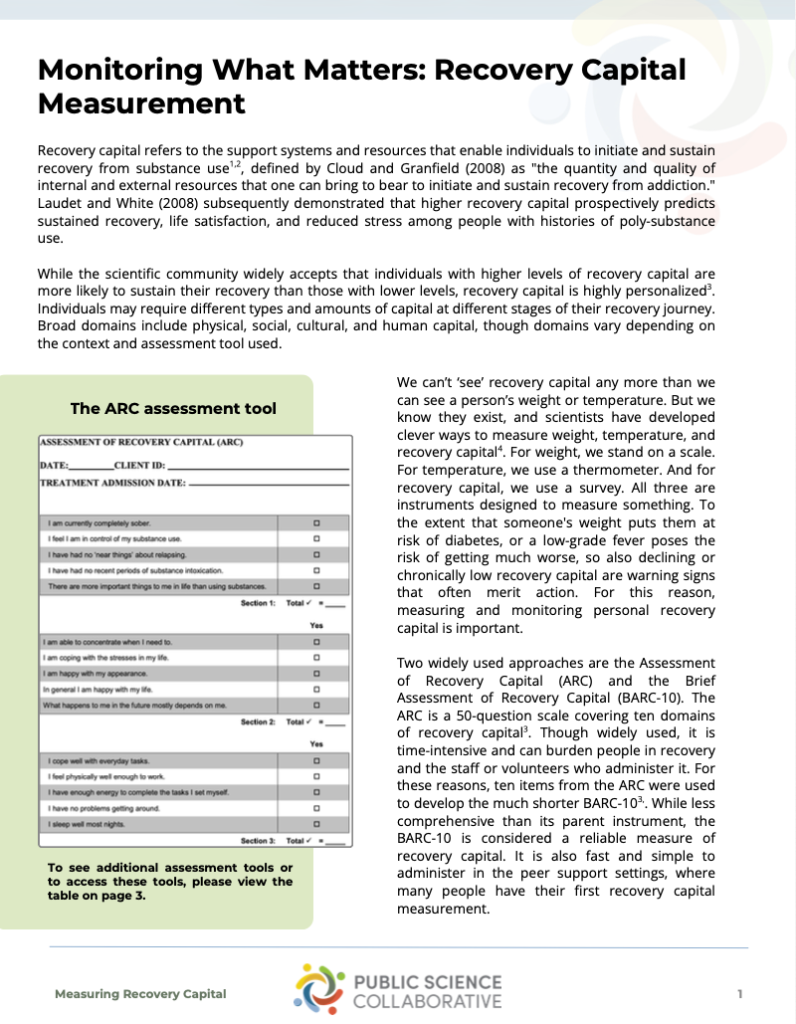
Monitoring What Matters: Recovery Capital Measurement

This quick read provides an overview of instruments for measuring and monitoring recovery capital. Recovery capital refers to the support systems and resources that enable individuals to initiate and sustain recovery from substance use. Recovery capital is unique to each individual, shaped by personal history, community context, and the stage of one’s recovery journey. Measuring …

Monitoring What Matters: Recovery Capital Measurement Read More »

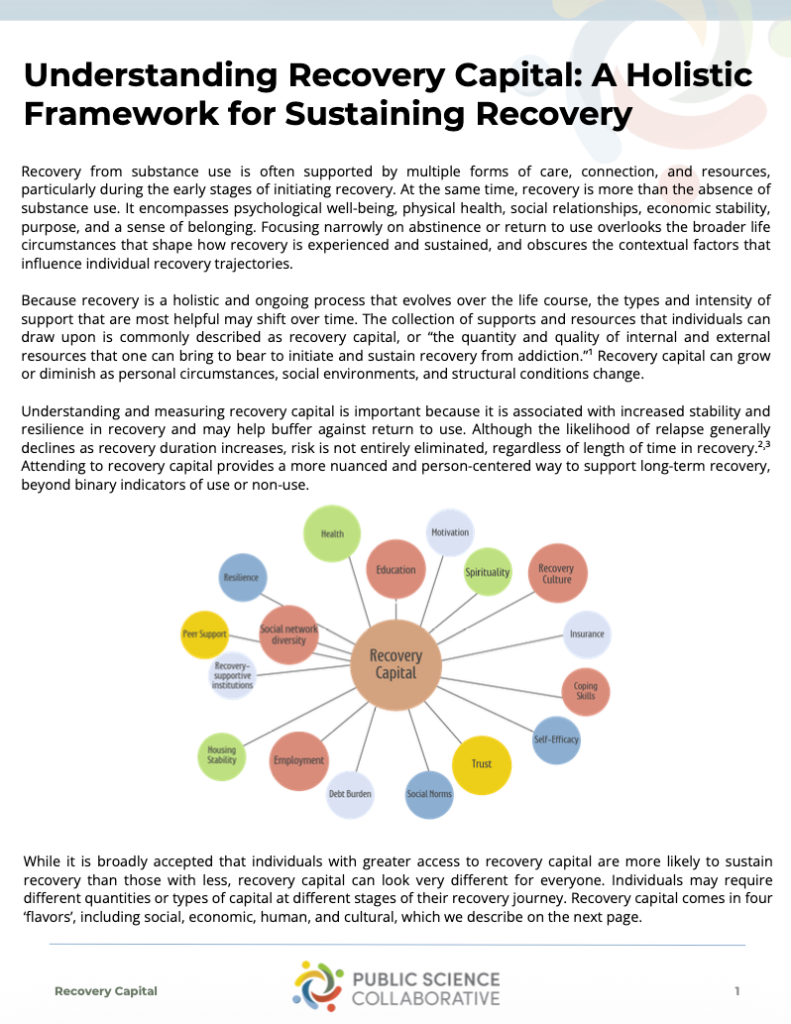
Understanding Recovery Capital cover page

Understanding Recovery Capital: A Holistic Framework for Sustaining Recovery

This quick read provides an introduction of recovery capital. Recovery from substance use is often supported by multiple forms of care, connection, and resources, particularly during the early stages of initiating recovery. At the same time, recovery is more than the absence of substance use. It encompasses psychological well-being, physical health, social relationships, economic stability, …

Understanding Recovery Capital: A Holistic Framework for Sustaining Recovery Read More »

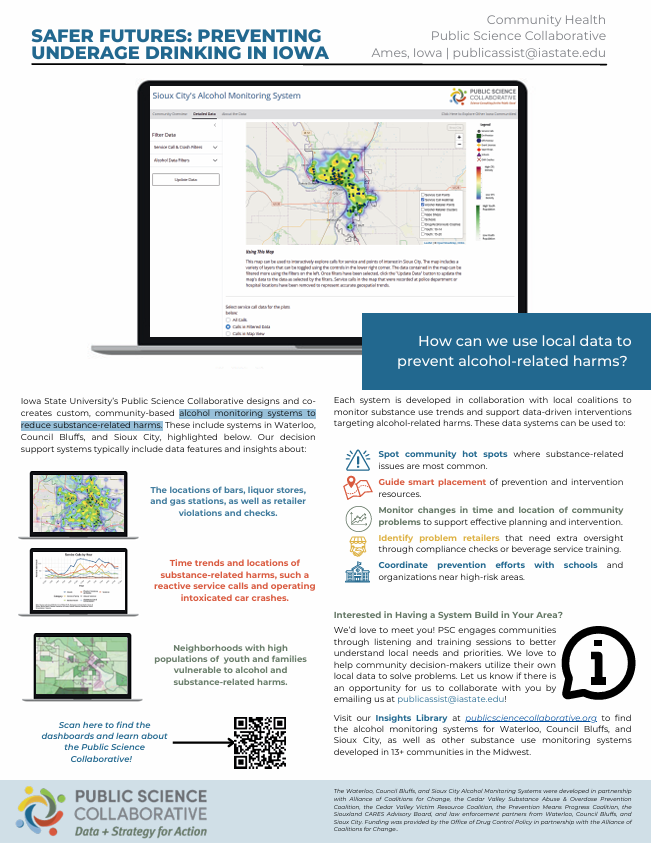
Safer Futures: Preventing Underage Drinking in Iowa

The Public Science Collaborative (PSC) partnered with Council Bluffs, Sioux City, and Waterloo to develop interactive dashboards of the alcohol risk environment in each community. The dashboards were developed as part of PSC’s participatory substance use surveillance monitoring program and are designed to serve as a resource to support data-informed decision-making aimed at reducing underage …

Safer Futures: Preventing Underage Drinking in Iowa Read More »

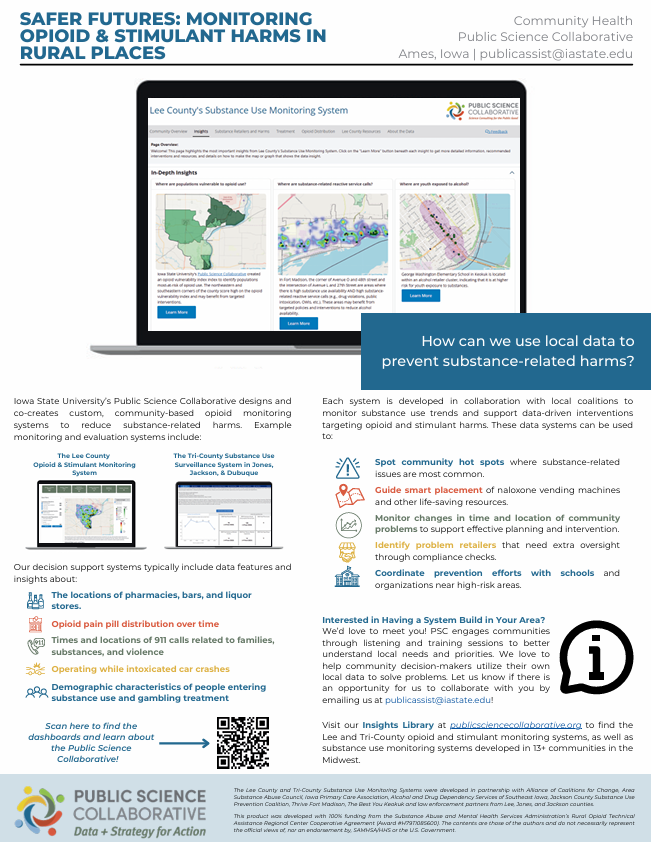
Safer Futures: Monitoring Opioid and Stimulant Harms in Rural Places

This quick read highlights community-based opioid monitoring systems the Public Science Collaborative developed as part of their participatory substance use surveillance monitoring program. These systems focus on the reduction of opioid-related harms and were launched in Lee, Jones, Jackson, and Dubuque counties. 

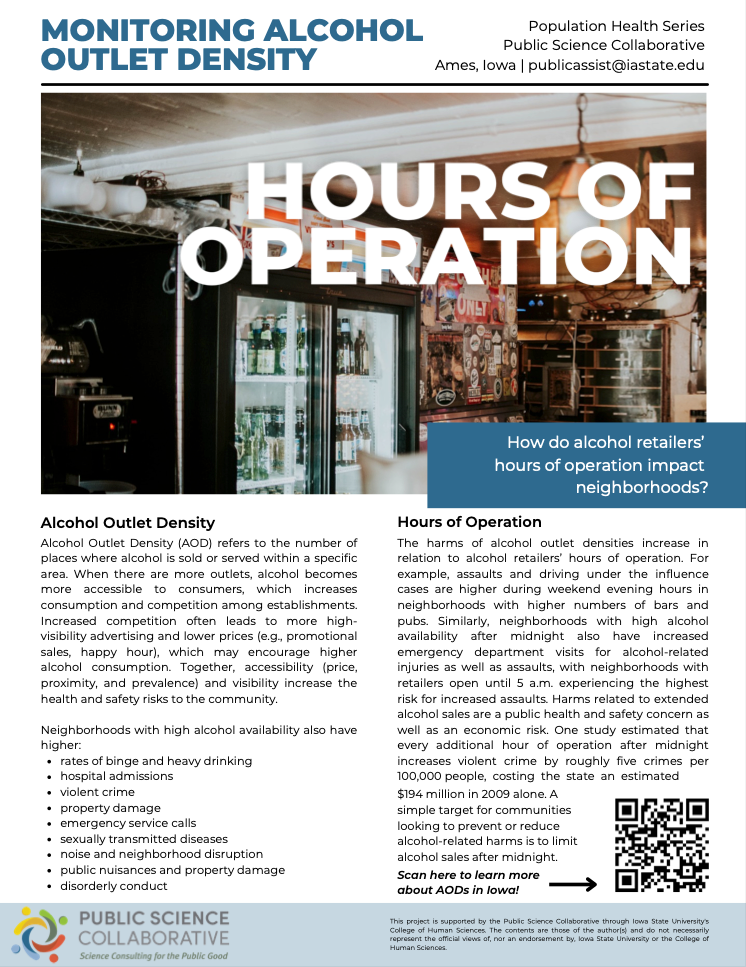
Hours of Operation report cover

Monitoring Alcohol Outlet Density, Hours of Operation: Quick Reads

As part of Public Science Collaborative’s Alcohol Research Initiative, this quick read highlights the relationship between alcohol retailers’ hours of operation in a neighborhood with its rates of binge drinking, violent crime, hospital admissions, property damage, and other occurrences. 

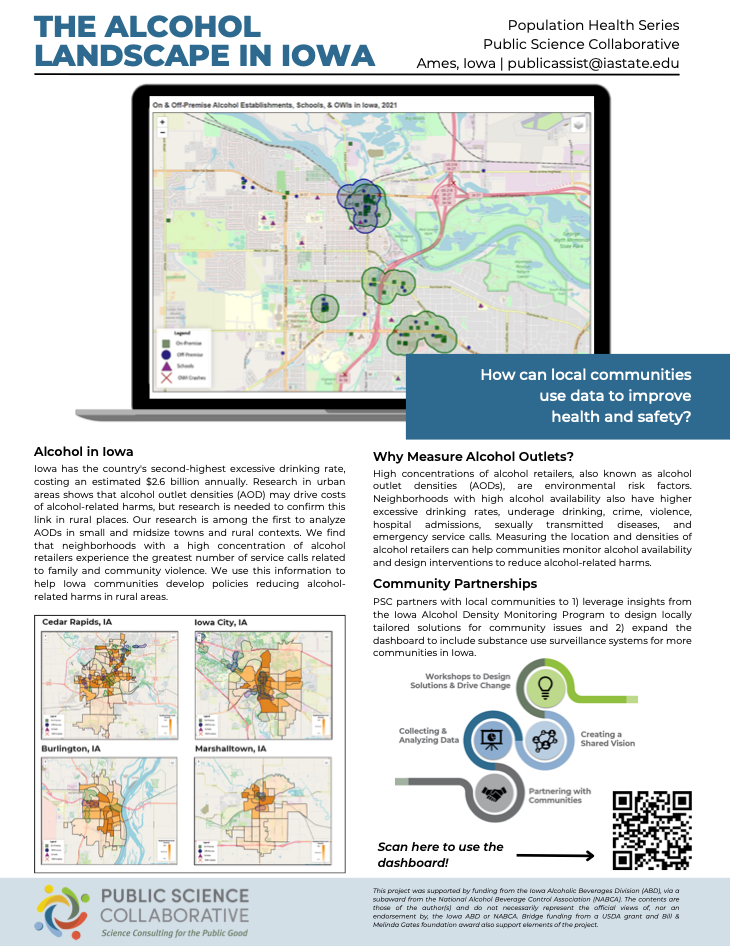
Alcohol Landscape in Iowa report cover

The Alcohol Landscape in Iowa: Quick Reads

As part of the Public Science Collaborative’s Alcohol Research Initiative, this quick read highlights how alcohol outlet densities (AODs) affect Iowa communities, especially in rural areas. This resource supports local efforts to design data-informed policies that reduce alcohol-related harms.

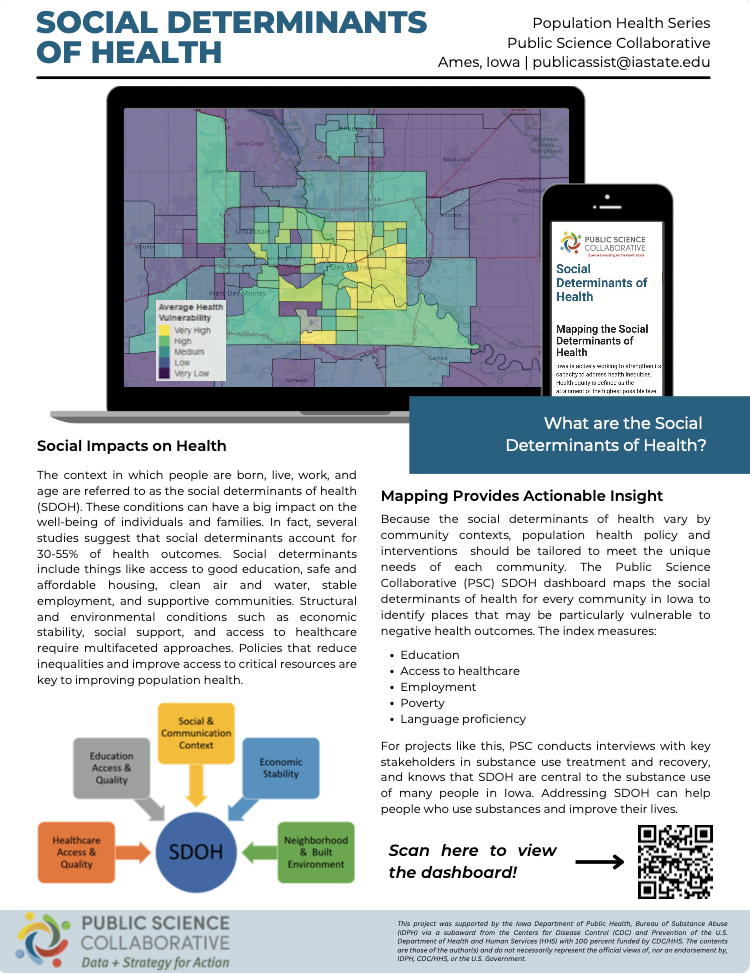
Social Determinants of Health quick read

Social Determinants of Health: Quick Reads

As part of the Public Science Collaborative’s substance use work, PSC has created several maps for counties across Iowa to describe the social determinants of health. This quick read also provides context on what social determinants of health are and why mapping them is crucial. 

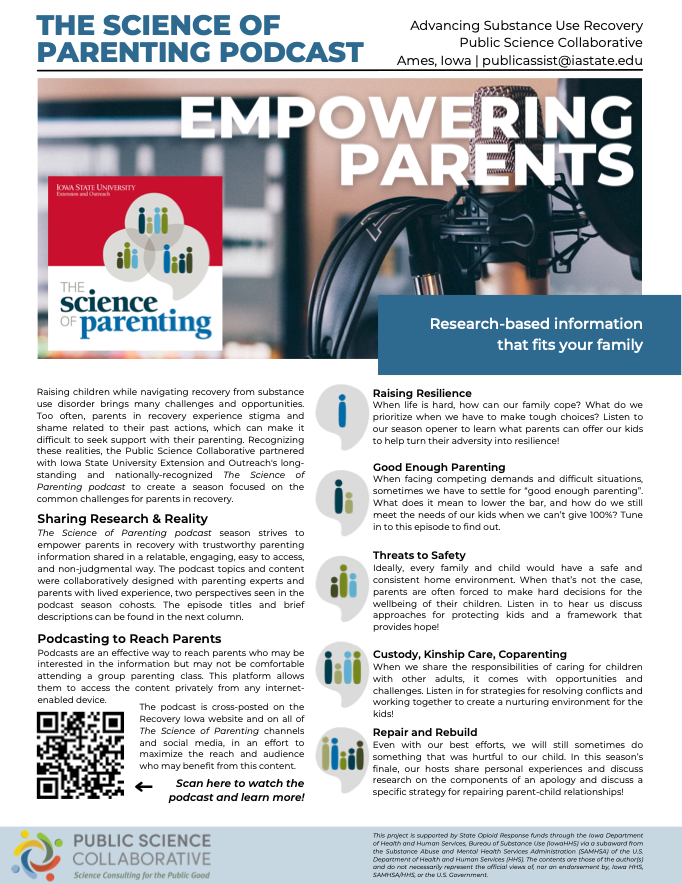
Science of Parenting podcast report cover

The Science of Parenting Podcast: Quick Reads

As part of the Public Science Collaborative’s Substance Use Recovery work, this quick read highlights PSC’s partnership with Iowa State University Extension and Outreach’s longstanding and nationally-recognized The Science of Parenting podcast to create a podcast season focused on the common challenges for parents in substance use recovery. 

The Substance Use Vulnerability Index quick read

The Substance Use Vulnerability Index: Quick Reads

As part of the Public Science Collaborative’s substance use work, this quick read covers PSC’s Substance Use Vulnerability (SUV) Index, a map illustrating the rates of risk for substance use across Iowa counties based off of demographic data.